Off to St Andrews, sight unseen

Stuart Butler (BSc Hons 1968; MA Hons 1971; PhD 1978) is a public policy expert with over 40 years’ experience in healthcare, budget, education and more. He retired as a senior fellow at the Brookings Institution in Washington, D.C., last year. As the first in his family to attend university and the recipient of grant funding as a student, Stuart funds a Wardlaw Scholarship as his way of ‘paying forward’ the gift he received.
I had never set foot in St Andrews before the morning I arrived, exactly 60 years ago, after a long overnight train journey from my home in Shropshire. My mother, who was born in Scotland, had always wanted me to attend a Scottish university. Nobody in my family had ever gone to university, and I had little idea how to choose one or what to expect. Including St Andrews in my applications just seemed like a way to make her happy. To my surprise, I was accepted after my A Levels, and off I went.
At first, I thought I knew exactly what my path would be. Having attended a technical high school in Shrewsbury, I fully intended to pursue a degree in Physics. But the four-year Scottish system encouraged exploration, especially in the first year, and I seized the opportunity. Within days I was signing up to study Economics, Ancient History, and Philosophy – subjects I had barely encountered in high school.

I also immersed myself in university life. I joined clubs, debated politics in the Debating Society as well as in the Student Union, and relished the social scene – from lively conversations and singing in the Beer Bar to student plays at the Byre Theatre (then a converted cowshed, where sitting in the front row meant you could rest your feet on the stage).
Life-changing decisions
Those first two years completely changed my life. Exposure to new subjects made me realise science was not my calling. So, I shifted course, first finishing an ordinary degree in Physics and Mathematics while taking arts courses, then moving on to an honours degree in Economics and Modern History.
But St Andrews and I weren’t finished with each other. I went on to complete a PhD in American History, which included a year in the United States. It was an experience that led to another life-changing decision: emigrating before completing my degree, which I eventually finished in 1978.

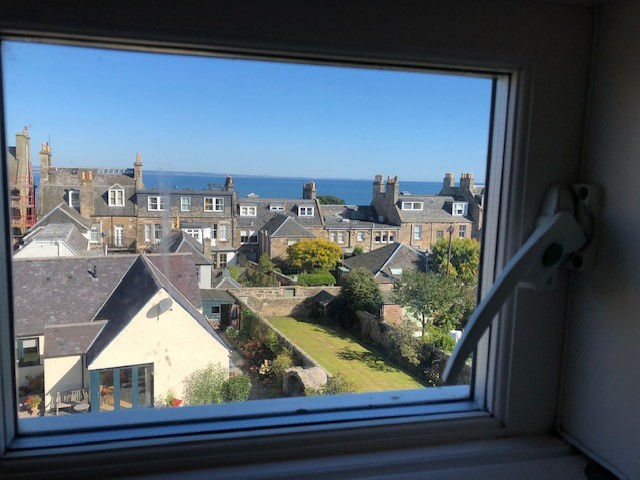
A room with a view
Since then, I’ve returned to St Andrews several times. In 1984, I introduced my new wife to the town, though late November’s rain and chill didn’t exactly charm her. In 2023, I redeemed myself with a summer visit, retracing my old haunts and showing her the seven places I had lived. The highlight for me was returning to the Ardgowan Hotel, where I had lodged during my first year. I even revisited the very room I had stayed in – though it certainly did not have a private bathroom back then.
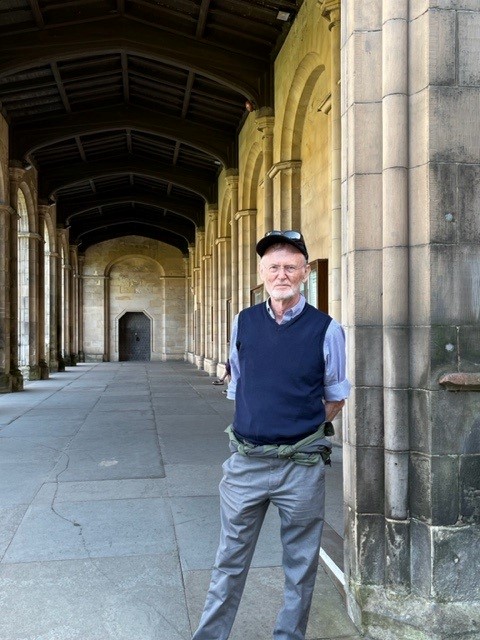
Looking back on nearly 50 years in Washington, D.C., I cannot overstate how profoundly St Andrews shaped me. My career in public policy research, culminating in my retirement from the Brookings Institution last year, grew directly out of the foundations laid there – from student politics to the rigorous grounding in history. I still recall one lecturer’s remark: “History teaches you about everything – with examples.”
Paying it forward
Though I became an American citizen long ago, I keep my British passport current. I know where I was formed.
My sense of gratitude for my years at St Andrews has also shaped how I mentor younger people and why I support opportunities for others. As the first in my family to attend university, I benefited from free tuition and a grant from my local authority. Today, funding a Wardlaw Scholarship is my way of ‘paying forward’ the gift I received.