Forged in fire

Melissa Fogwill (MSc 2022) was recently appointed by accountancy firm Henderson Loggie as the company’s first Chief Technology Officer. Despite navigating a global pandemic and personal health struggle during her time at the University, Melissa excelled in her studies – achieving a distinction. Now an upcoming tech leader, she reflects on the support she received at St Andrews, on becoming a published author, and her continued work in inclusion.
I grew up in a SIMD20 (Scottish Index of Multiple Deprivation) area of Scotland – amongst the most deprived 20% of areas in the country – the kind of background where attending university, let alone the University of St Andrews, wasn’t the usual path. I didn’t have contacts, mentors or a family blueprint for higher education, but what I did have was ambition and a belief that I wanted more for myself.
When I began my postgraduate degree, after completing an undergraduate degree in Physics at Heriot-Watt University, I was already working full-time. That instantly made me different from the traditional student. However, I’ve never let being different hold me back. If anything, I’ve made it my advantage.
I chose St Andrews because I wanted the challenge of studying at one of the world’s best universities while having the flexibility to study part-time and work full-time. It was the perfect balance of ambition and practicality, exactly what I needed to prove to myself what I was capable of.
A challenging time
My time at St Andrews was anything but traditional. Covid-19 meant that most of my degree was taught online, which actually suited me perfectly. I was working full-time, so the ability to rewatch lectures at midnight, pause when I needed to and pick things up again after work was a lifesaver. I really did stress test the rewind button on Panopto!
St Andrews did a fantastic job during this time, ensuring that although you were working remotely, you weren’t on your own. On top of the scheduled lectures, they placed a focus on group work. In one module, Managing Human Resources, a group of us were put together for a collaborative project – a lot of us didn’t know one another and wouldn’t necessarily have worked together under normal circumstances. However, this built a real sense of connection within the cohort – members would FaceTime each other, we had a WhatsApp group – it was a personable approach to a really difficult time for students.
My favourite haunt, unfortunately, wasn’t the Students’ Association or a cosy cafe in town; instead, it was my kitchen table, laptop perched precariously, coffee number five of the day within arm’s reach. Glamorous, right?

That said, the highlight wasn’t the caffeine intake, although it deserves an honourable mention; it was the support I found when things got tough. During my studies, I was diagnosed with idiopathic intracranial hypertension, a brain condition that landed me in the hospital and threw my whole life up in the air.
At that point, walking away would have been the easy option, but instead, St Andrews and my dissertation supervisor, Dr Areti Manataki, lecturer in the School of Computer Science, rallied around me. She showed patience when my health slowed me down and encouraged me when I doubted myself. Areti helped to break down the work into bite-sized chunks, helping me get through my dissertation and exams. This took an extremely stressful situation and made it manageable. Somehow, between the coffee, the midnight lectures and her support, we not only finished my dissertation but co-authored an award-winning published paper, which still sounds crazy to say out loud.
St Andrews challenged me academically but supported me personally in ways I’ll never forget. The University saw my potential, even when I struggled to see it myself. Reflecting on those who supported me at St Andrews, I feel a great sense of gratitude. The guidance I received from the University community, particularly from Areti, gave me the confidence to succeed; they really helped me to believe that I could do it.
So, although I wasn’t your classic St Andrews postgrad, spending hours on campus and in the library until 3am, I discovered something empowering: that success doesn’t always look like the glossy prospectus. Sometimes it looks like sheer persistence, a laptop that never leaves your side and the determination to keep going no matter what.
Forged in fire
Post-graduation, I carried forward what my husband jokingly calls being ‘forged in fire’. He is right – I thrive when things get tough. Resilience has been my constant companion, shaping not only my career but also how I see the world. Knowing I was able to get through, to date, my lowest point and succeed, I feel ready for whatever life has to throw at me.
Nearly two years after graduating from St Andrews, something unexpected happened; my dissertation grew legs and became a published paper. If you’d told me on day one that I’d be a published author, I’d probably have laughed, but there it was: ‘Interactive data comics for communicating medical data to the general public’.
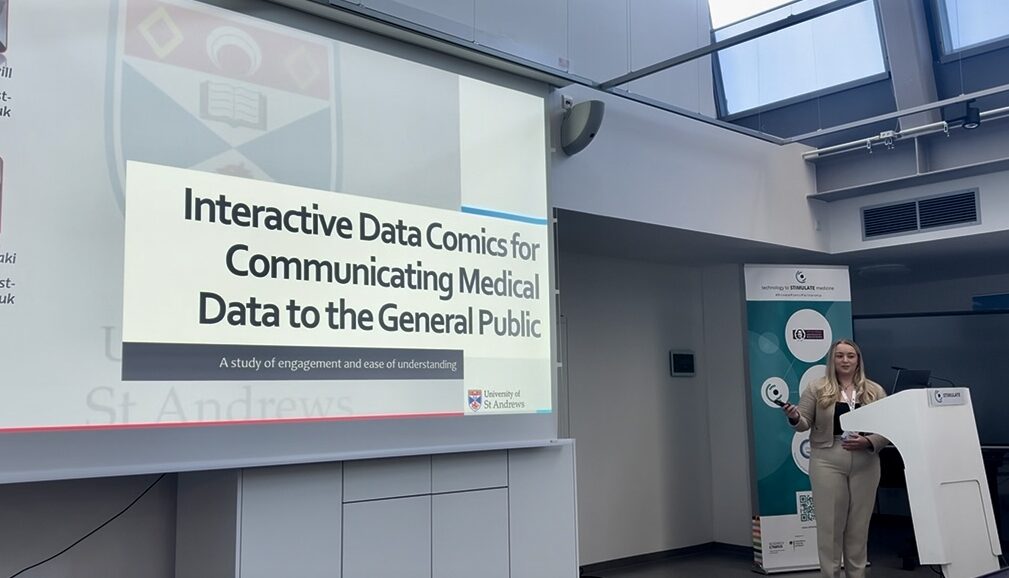
The idea came from my work in NHS data roles, where I saw firsthand how often the people who were in the greatest need of information, the patients and families, were excluded by the way that it was presented. I found this to be especially prevalent with cancer, a topic that touches almost every family. The data was so often overwhelming, locked behind jargon and charts that felt like they belonged to someone else. Data should be a tool for empowerment, not a barrier.
With my dissertation supervisor, I explored a different approach: turning that intimidating information into story-driven data comics that people could understand and connect with. When the paper was finally published, it felt like a statement of values – that accessibility, empathy and equity belong at the heart of even the most technical work.
Breaking down barriers
That same mindset has guided me into my current role as Chief Technology Officer at Henderson Loggie. Tech isn’t an easy industry to stand out in, especially as a woman – only 23% of Scotland’s tech workforce are women. Despite this, I’ve built my career the same way I built my studies: with ambition, resilience and a refusal to let being different mean being seen as less than.
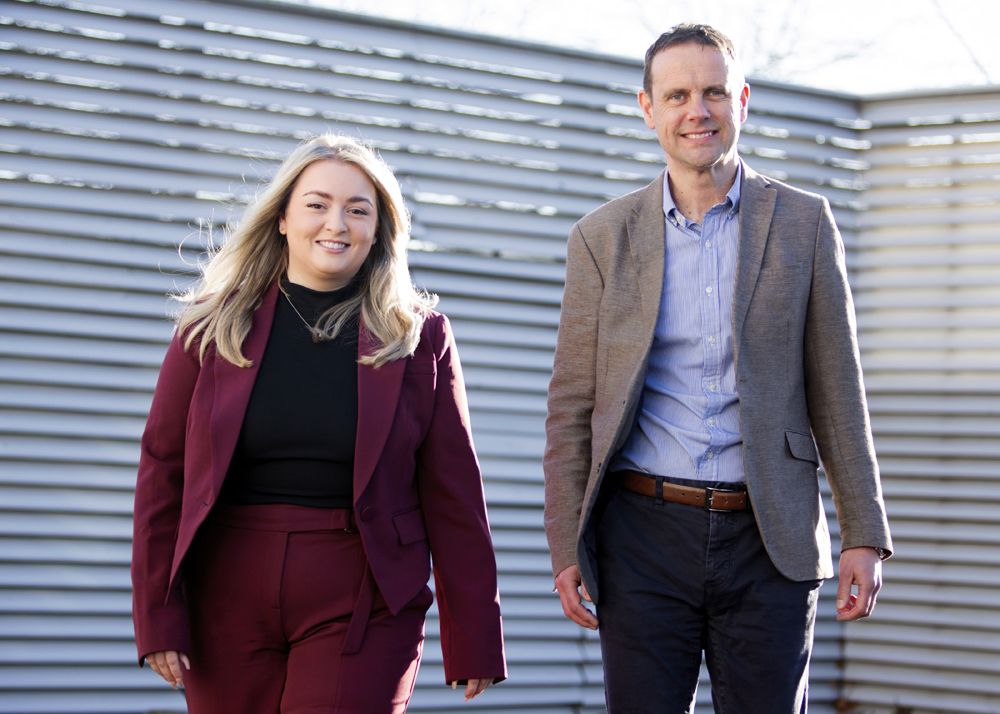
I’m also deeply aware of the importance of visibility. As a woman in a senior technology role, I want to show others from backgrounds like mine that there is space for them within the industry. Representation matters, and part of my drive now is to help open those doors wider.
My proudest achievement isn’t the title, or the paper, or even the resilience it took to get here – it’s knowing I’ve carved a path that wasn’t laid out for me. If my story encourages even one other student from a background like mine to take that leap, then it’s all been worth it!
The Digital Nexus building will create a cutting-edge home for the School of Computer Science on the North Haugh. Find out more about the Digital Nexus building, part of the Making Waves Campaign.