It all started with St Andrews…

Margaret Wood (MB ChB 1970) is a leader in anaesthesiology care, education, and research. From humble beginnings in Leeds, she attended St Andrews where she met her husband, Alastair Wood (MB ChB 1970), studied anaesthesia in Dundee, spent 20 years in research and cardiothoracic anaesthesia on the academic faculty at Vanderbilt University, raised a family and became a tenured professor. In 1995 she was appointed Chairman of the Department of Anaesthesiology at Columbia University in New York where she remained Chairman for 20 years until she retired in 2016. Here, Margaret shares her story.
My St Andrews story started when I was 11 years old. My father used to bring a book home for me every Friday night and, when I was 11, he brought me The Citadel by A. J. Cronin. Andrew Manson is the hero (or antihero) – a fictional physician who graduates from the University of St Andrews with the Founder’s Medal, which recognises students who have demonstrated academic excellence. In the book, Manson battles to apply the scientific method to overcome the injustices and inadequacies of pre-war healthcare. I read the book that weekend and announced I was going to be a doctor and go to St Andrews – and I did.
I grew up in Leeds, a city full of Northern English pragmatism, and was the first in my family to attend university. My family were incredibly supportive of my decision to go to St Andrews and pursue higher education although I am not sure they had a clear idea of what a career in medicine – particularly academic medicine would involve.
Strong foundations
My medical training at St Andrews gave me the tools to practise anywhere in the world, and also to adjust to the inevitable changes in clinical practice. While in Dundee you didn’t have the huge patient volume and advanced disease to care for that you see in some countries – including the US – and there was a real emphasis on science, rigour and detail, and that gave me the foundations to work things out on my own from first principles
At St Andrews, I met my future husband, Alastair, in the anatomy dissection room during the first week. We can quite literally say we met over a dead body!

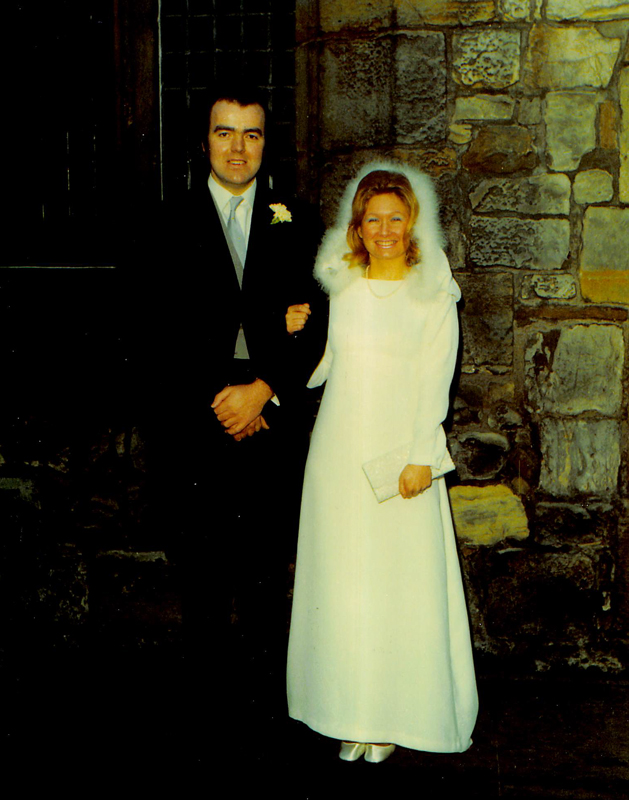
Beyond that, my memories of university are of it being very cold. I remember my father bought me an electric blanket as my Christmas present during my first year. However, in the summer it was light late into the evening and we’d go hiking in Glen Clova, which Alastair and I still like to do.
We both look back on our time as St Andrews undergraduates very fondly.
From St Andrews to the States
After graduating and ‘house jobs’, I entered specialist training in anaesthesia leading to my FFARCS. In late 1975 Alastair was awarded a prestigious MSD Fellowship which allowed him to study for two years in the United States and he chose to go to Vanderbilt University which had a large and research-intensive Department of Medicine and Clinical Pharmacology. I was fortunate that Vanderbilt were also prepared to offer me a position in anaesthesiology.
So, in January 1976 we packed our bags and flew to America to start our two-year adventure. Parenthetically I have always recognised since how difficult it would have been for both of us to obtain senior positions in the same institution were it not for that first step and I have tried in my subsequent career (when I was responsible for recruitment) to be sensitive during the recruitment process to the needs of dual-career couples, particularly early in their careers – not just at senior levels.
My decision to remain in academic medicine was an unusual choice for a woman at that time as there were very few – if any – female role models of successful women in academic medicine and fewer still with children.
Anaesthesiology, in particular subspecialty anaesthesia was only just emerging as a major specialty. It was new and exciting and because it was relatively new and expanding it was a specialty willing to give women an opportunity.
Under Vanderbilt’s Chair of Anaesthesiology, Dr Bradley Smith, I was given the resources and mentorship to develop my own research programme in drug metabolism and anaesthesia pharmacology. Clinically paediatric, particularly neonatal, cardiac surgery was in its early stages of development and that was the niche in which I worked – incredibly exciting times as we performed some operations for the first time for the entire team.
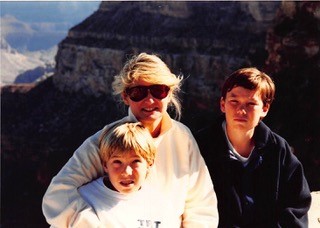
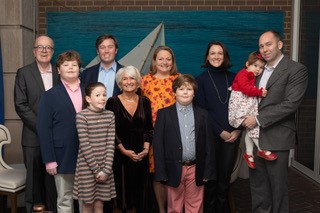
It was no easy feat in the UK to get consultant jobs together in the same hospital, but Vanderbilt understood our situation and later offered Alastair and I positions there where we moved up the ranks. I was at Vanderbilt for 20 years, became a tenured professor in 1986 and a paediatric cardiac anaesthesiologist, along with developing a program in anaesthetic pharmacology research. Together we wrote a successful anaesthesia pharmacology textbook – we dedicated the second edition to our two children – the dedication read “to our children without whose help this book would have been finished in half the time”.
Anaesthesiology and the Apgar Scholars Program
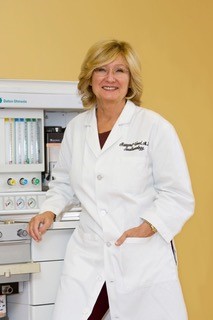
In 1995, I was invited to become Chair of Anaesthesiology at Columbia University in New York. I accepted and held that position until 2016. I am particularly proud of my academic mentorship programme – the Apgar Scholars Program – which provides research training for anaesthesiology trainees while undergoing their clinical training. The purpose of this training programme was to provide a formal training path for future academic anaesthesiologists. By incorporating two years of research training onto the resident training we aim to allow them to emerge with both the clinical and research experience at the end of their clinical training programme to be able to develop their own academic careers into the future.
We named this new scholars’ programme in honour of Virginia Apgar. After World War II, Virginia Apgar was Director of the Division of Obstetric Anaesthesia at Columbia and developed the Apgar Score, a scoring system that measures the health of a newborn baby at birth and correlates with neonatal outcomes. In our specialty her work represented one of the first significant pieces of epidemiology research. It was, therefore, exciting that as Chairman I was able to build on that history by setting up and recruiting into a Centre of Epidemiology in Anaesthesia within the Department which has been extremely successful in advancing Health Care and Policy at a national level.
I was also an editor of the journal Anaesthesiology, Chair of the Accreditation Council for Graduate Medical Education (ACGME) – the US national residency accreditation committee – and served on the US Food and Drug Administration (FDA).
Alastair became Assistant Vice Chancellor for Research at Vanderbilt, was the Drug Therapy Editor of The New England Journal of Medicine, a member of the Editorial Board of the New England Journal of Medicine and was elected to the United States National Academy of Medicine.
Looking back now, I’d say it was a combination of the opportunity to be involved in both home institutional and national administration that allowed me to shape my speciality and also exert and provide influence on a national and international level to advance speciality care.


Giving back
We’ve remained in contact with St Andrews through friends, regular visits to Scotland and now, through our Wood School of Medicine Fund, which is supporting students in the School of Medicine where we first met.

During our long association and experience of teaching, mentoring and guiding medical students and clinical trainees we have recognised how unexpected or sudden changes in a student’s financial situation can have devastating effects on that student’s ability to continue to productively participate in their education.
At its worst it may involve the student feeling they must withdraw from continuing participation in their studies, but even less serious financial distress has a negative impact on a student’s ability to benefit from and contribute to all that St Andrews has to offer and limits their ability to reach their full potential.
We therefore decided to endow a fund which, when a student faced some unexpected financial pressure, would provide the Medical School Dean with the ability to offer such a student the financial help to overcome or bridge their current problem and focus on their education – the reason they are at St Andrews – and avoid them losing focus on that education through financial distraction.
We hope that this will allow students who matriculate in the Medical School to benefit from all that St Andrews has to offer and allow them to look back as we do years later and recognise how the education which they received at St Andrews allowed them to meaningfully contribute to society and build a life wherever in the world life takes them.
Dear Margaret, It was lovely to see you and Alastair at the latest reunion. You have both had inspiring careers. I applaud your generosity in giving back to the institution that made it all possible and would encourage others to do the same. Warm regards, Geoffrey and Alison