A million miles from Earth

Dr Mark Clampin (PhD 1986) is the Deputy Associate Administrator, Science Mission Directorate, at NASA, providing executive leadership for NASA’s portfolio of science programmes. He reflects on his PhD at St Andrews, leading astrophysics research at NASA, and his contributions towards a return to the Moon and sending humans to Mars.
I went to St Andrews in 1982 to pursue a PhD in Astronomy, working on the development of astronomical sensor systems. The day I travelled to Scotland for my interview remains vivid in my memory. After an overnight train journey, I briefly emerged from Waverley station and saw Edinburgh Castle, perched on Castle Rock, for the first time. Hours later, as I walked along the railway platform at Leuchars, a Phantom tore through the sky from RAF Leuchars shattering the morning’s silence as it engaged afterburner.
From Sub Aqua Club to the Hubble Space Telescope
After three years as an undergraduate in London, St Andrews was a big change. I rapidly came to appreciate the value of the University’s strong sense of academic community and the tradition of mentorship through academic families. St Andrews has a storied history, and wherever one goes in the town the architectural connection with the past is never far away. A view of the town from St Andrews Pier still hangs in my office today.
Living in Scotland, I developed a lifelong love for the Highlands and the West of Scotland, both above and below the water. Arriving as an experienced scuba diver, I became a member of the University’s Sub Aqua Club and dived around the country exploring Skye, Mull, Oban and Port Appin. These expeditions provided valuable experience in leading people and managing risks that I would later bring to my management style.
In late 1985, I was offered a postdoctoral appointment with Dr Francesco Paresce – a scientist and grandson of the Italian engineer, inventor and politician Guillermo Marconi – at the Space Telescope Science Institute (STScI) in Baltimore. Sadly, a week before I was due to leave, I watched in shock as the Space Shuttle Challenger disintegrated during launch. The Hubble Space Telescope was originally due to launch soon after Challenger and was subsequently postponed. This shifted the focus of my research with Dr Paresce to developing instruments for studying planet-forming disks around stars. At the end of this two-year postdoc, this work continued at the Johns Hopkins University (JHU).
In 1992, I secured a position at the STScI as a scientist for the Wide Field and Planetary Camera-2 (WFPC2), to be installed during the First Hubble Servicing Mission (SM1). Hubble launched in 1990, but it was discovered soon after that the telescope’s mirror had a flaw in its prescription. SM1 was NASA’s recovery mission to install new instruments into Hubble with corrective optics. It was the first time the Agency had undertaken such an ambitious mission, involving numerous spacewalks to change instruments on the telescope.
Watching the mission unfold from STScI was one of those moments where you realise you are playing a role in making history. The stakes for NASA could not have been higher, but the SM1 astronaut team accomplished the mission, keeping us enthralled as they worked above Earth on the telescope.
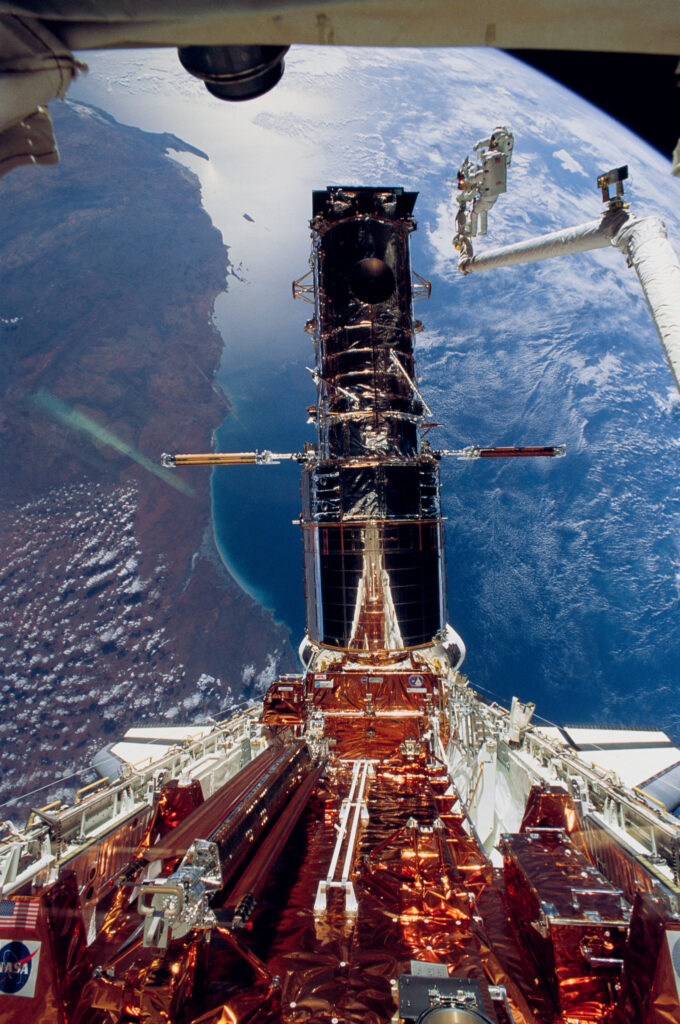
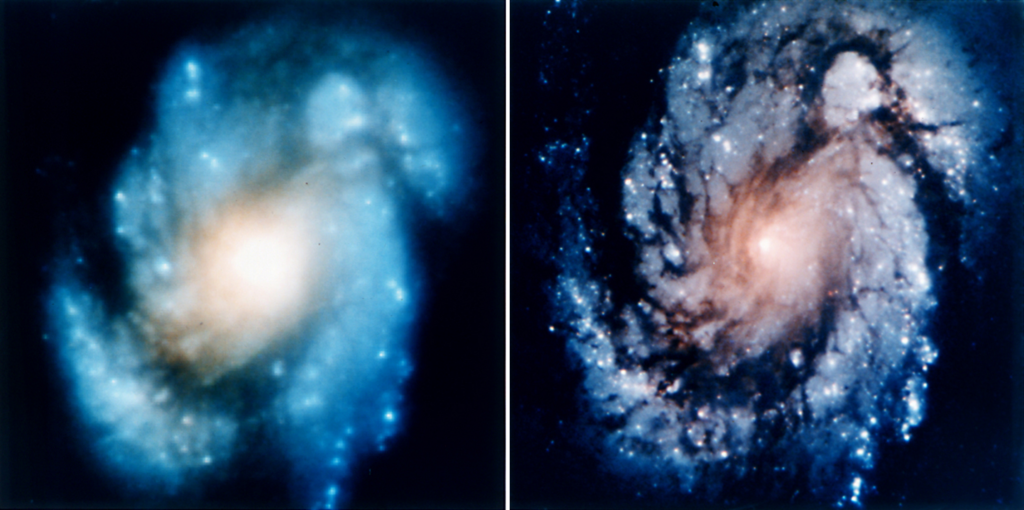
The new instruments restored Hubble’s image quality and set it on the path to groundbreaking new discoveries for the next three decades.
Revealing the early universe
After the success of SM1, I was invited to join a proposal team led by Dr Holland Ford (JHU) for a next-generation camera for the Hubble, to be installed before the millennium,. I was sitting at the controls of a three-metre telescope in Chile when an email arrived notifying the team that our Advanced Camera for Surveys (ACS) had won the competition. ACS was designed to look back further into the early universe than ever before and would cost around $70 million to design and manufacture. Over the following decade, I focused on developing innovative cameras for this instrument, alongside our partners at Ball Aerospace.
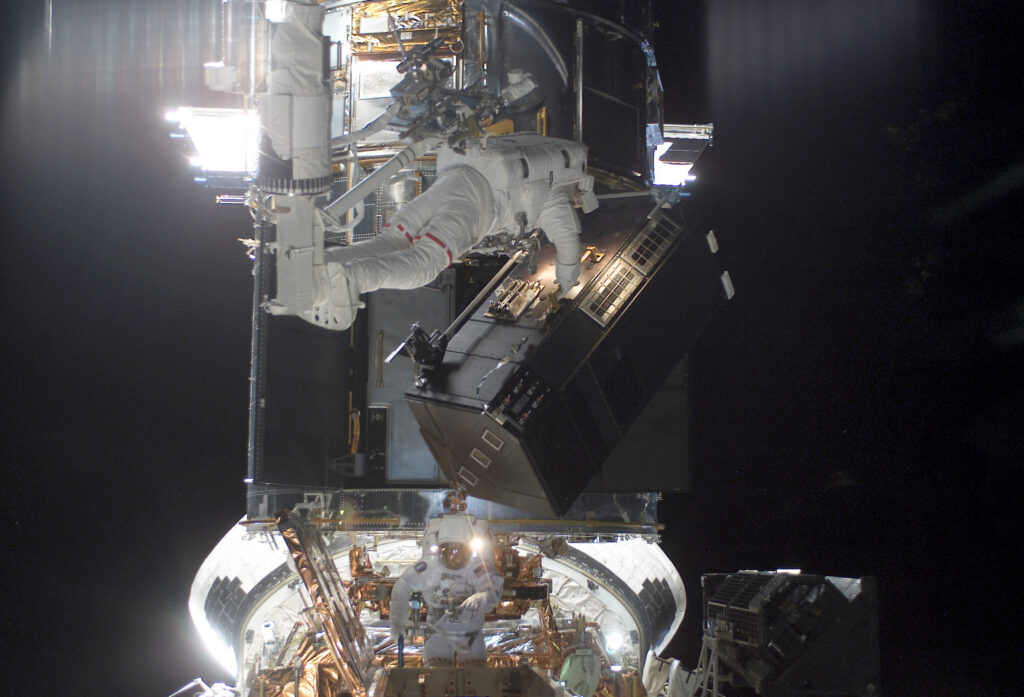
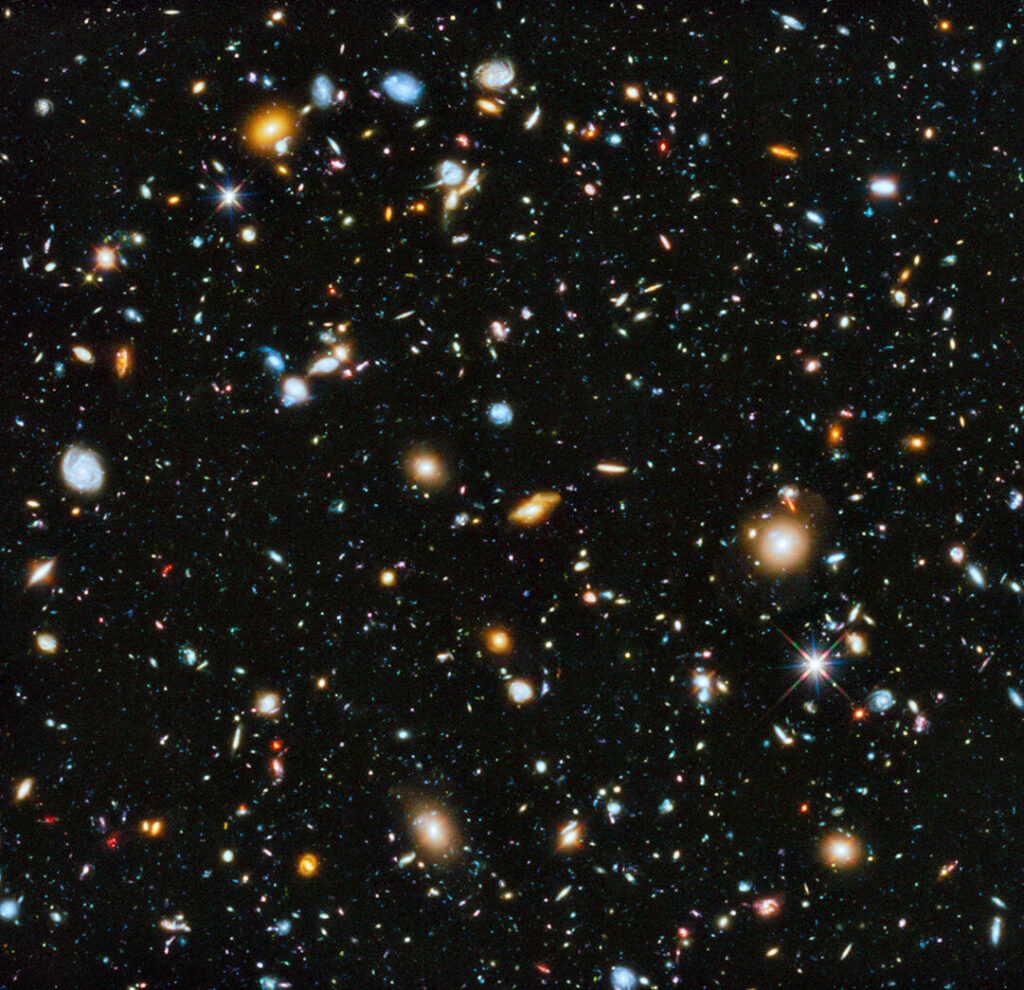
In 2002, Servicing Mission 3B led by Astronaut John Grunsfeld launched. After investing ten years in building the instrument, the first hours after Hubble installation were undeniably tense. This is the time when ‘aliveness’ tests are run to check that instrument operation is healthy. The ACS was a great success, capturing an observation known as the Ultra Deep Field, which remains the deepest visible image of the universe, viewing galaxies that formed as early as one billion years after the Big Bang. Observing with ACS, in collaboration with colleagues from University of California, Berkeley, I was excited to discover a dust disk surrounding one of the brightest stars in the southern hemisphere, Fomalhaut. This disk is analogous to the Kuiper Belt in our solar system and represents the last stages of planetary system formation.
Building the James Webb Space Telescope
With the success of ACS, I was approached by Dr John Mather to join NASA at the Goddard Space Flight Center (GSFC) and serve as the Observatory Project Scientist for the James Webb Space Telescope (Webb), a nascent project that was destined to follow Hubble.

Webb is one of the most complex instruments ever built: a six-metre telescope, designed to view the universe in the light of infrared or heat radiation. To achieve this goal, it must operate at cryogenic temperatures, a million miles from Earth. To maximise the mission lifetime, the telescope was designed to be passively cooled using a large, tennis-court sized stack of five membranes to shield the optics from the sun.
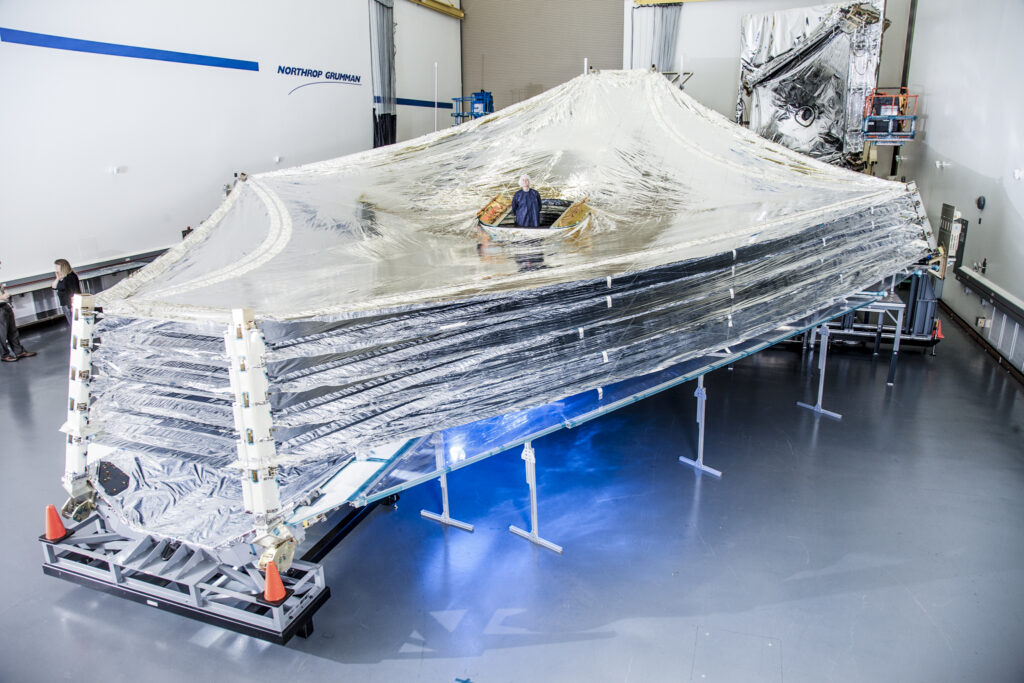
Image credit: Northrup Grumman
Webb was too large to be launched in its operational configuration. Instead it had to be folded and stowed for launch and then deployed in space. Over the next 13 years, I worked arm in arm with the Webb’s engineering teams to identify and solve numerous technical challenges across a range of engineering disciplines to ensure the telescope worked and met its scientific requirements.

Image credit: NASA/Chris Gunn

Image credit: NASA/Chris Gunn
Webb was delivered to Northrop Grumman at Space Park in California for integration with the spacecraft in 2016. It was then that, having gained expertise in spacecraft engineering, project management, and business finance, I transitioned to management at GSFC, first as Director of Astrophysics, then as Director of Science, managing GSFC’s space science research and missions at an exciting time for its programmes. One major highlight was the rendezvous of the OSIRIS-REx mission with asteroid Bennu. After a year spent surveying the asteroid, OSIRIS-Rex undertook a procedure known as Touch and Go (TAG) to collect a sample of rocks and dust from the surface of Bennu.
Sitting in the Lockheed Martin control centre and watching success of the TAG was thrilling. The mission revealed molecules that, on our planet, are key to life, and while not evidence for life itself, they indicate conditions necessary for the emergence of life may have been widespread across the early solar system.
Ready for launch
In December 2021, the Webb telescope was finally ready for launch on an Ariane V rocket from French Guiana. Sadly, due to Covid-19 restrictions attendance at the launch was limited, but I was able to support the launch at the Space Telescope Science Institute with NASA’s Deputy Administrator. Launching Webb was just the beginning. It would take many months to slowly deploy each element of the telescope to its operational configuration. Once deployed the 18 segments of the telescope’s primary mirror were adjusted so that they would behave like a single mirror. I was thrilled when my GSFC Science team reported that not only was the Observatory meeting its science specification, but was exceeding them with sharper images, and 30% higher sensitivity.

Webb’s outstanding performance was demonstrated by its first light image of a ‘gravitationally lensed’ galaxy cluster known as SMACS 0723. Uniquely, this first light image was revealed in a special event hosted by the President of the United States. Webb continues to produce ground-breaking science every day and is making significant impacts in every field of astrophysics.
The future of astrophysics
Shortly before first light was announced, I was selected as NASA’s Director of Astrophysics, responsible for NASA’s entire astrophysics portfolio. For me, perhaps one of the most exciting aspects of this role was working with the whole US astronomy and astrophysics community, and our international partners. During my tenure, NASA launched several new astrophysics missions. XRISM was a mission developed in collaboration with Japan to study galaxy clusters and outflows from galaxy nuclei via observations of their X-ray emission. XRISM featured new technology, an imaging quantum sensor. SPHEREx was a new infrared mission to conduct an all-sky spectroscopic survey, designed to provide insight into an early stage of the universe known as inflation.
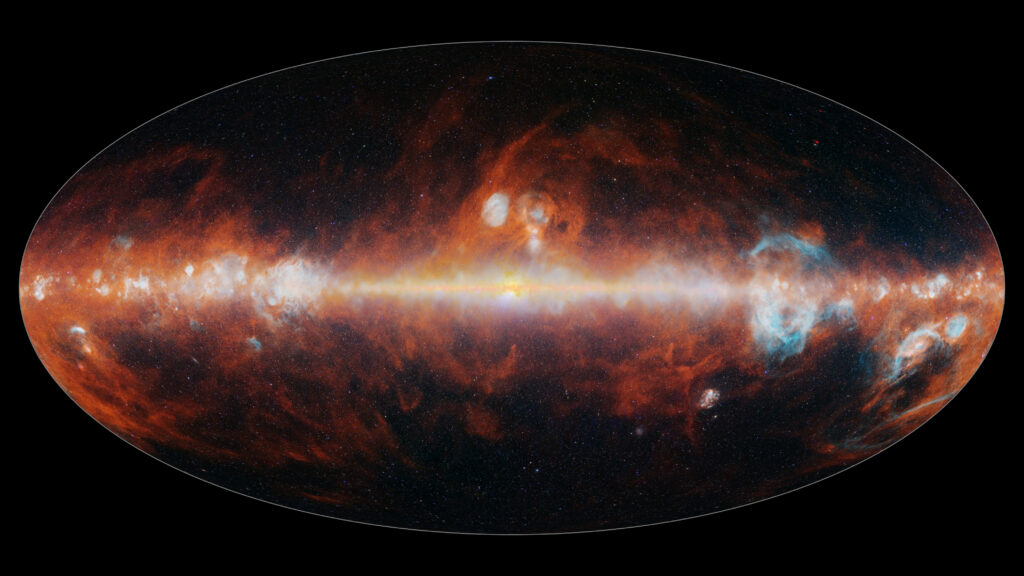
Every decade, the National Academies for Science (NAS) conducts a community survey to recommend the major scientific priorities for astrophysics in the ten years to come. In 2021, NAS recommended a large astrophysics mission to survey several hundred nearby sun-like stars and study the candidates in detail for evidence of life. My first task as Director of Astrophysics was to implement this recommendation. At a meeting of the American Astronomical Society, I announced the Habitable Worlds Observatory (HWO). This mission concept is now in the early stages of development and will have the potential to show that mankind is not alone in the universe.
Today, I am Deputy Associate Administrator (AA) for the Science Mission Directorate (SMD) at NASA. I help lead the portfolio of NASA’s science programmes, which comprise of Earth Science, Heliophysics, Planetary Physics, Astrophysics, Biology, Fundamental Physics and a high-end computing programme that serves the Agency. In this role I partner with the AA in providing leadership of all aspects of the Directorate’s approximately $7 billion portfolio of missions and programs, developing the annual budgets, and SMD’s interactions with the US Congress and Presidential Administration. Since many of SMDs programs are international collaborations there is also extensive coordination with Senior Leadership at other International Space Agencies.
The outlook is exciting with missions in development such as the Dragonfly mission, NASA’s first aerial science mission to explore another world. The Dragonfly mission will land on Saturn’s moon, Titan. Covering more terrain than any other NASA mission, its cameras will take aerial pictures, and at each landing site it will investigate complex chemistry that is the precursor to life. In 2026, NASA will launch the Roman Space Telescope, NASA’s first survey flagship, whose mission is to study the nature of dark energy, and dark matter.
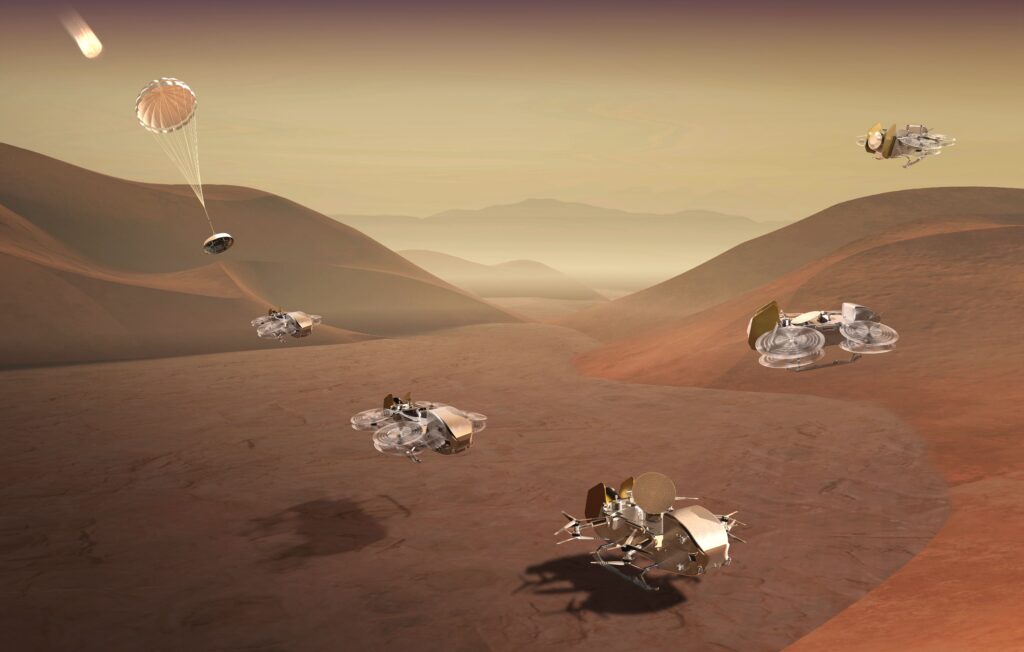
I consider myself privileged to have worked on NASA’s science programmes. Every day, our missions make new scientific discoveries, benefit humanity and prepare NASA for a return to the Moon and sending man to Mars. It has been a long journey from the small telescopes at the Buchanan Gardens Observatory in St Andrews to the Webb Telescope, a million miles from Earth.