The long road to St Andrews

David John Wallace (MA Hons 1988) – always known as John – took an extremely unusual route to the university that ultimately became a hugely important part of his life.
Born in Belfast on 7 May 1954, John’s early years saw him adopted by loving parents, Billy and Emily, and he grew up amid the still war-damaged environment of the city. He often recounted tales of playing in and around bombed-out buildings and air raid shelters. Games of cops and robbers, spies and spacemen were fantastic outlets for a brilliantly creative boy with a fabulous imagination. It’s perhaps surprising that John had the energy for such games, as from the age of 11, he worked. Before school, John helped with a local milk-round, while after school he had a paper round, and at the weekends he was a bookie’s runner placing bets and collecting winnings for older folk in the neighbourhood.
When John left school, his first job built on his milk-round experience, working for Northern Dairies, delivering large quantities of milk to schools and hospitals in and beyond Belfast. John had many wonderful stories from this period in his life, including the occasion when he saw a pig fly! He was in the milk lorry with the driver, following a farmer who was towing a pig in a trailer along the winding roads of rural County Down. They noted that the farmer was driving rather fast and took a particularly sharp bend at such a high speed that the trailer detached and it, plus the pig, soared up and over the hedgerow into a field beyond. John said he never forgot the expression of stunned surprise on the pig’s face as it took flight!
The Troubles
The 1960s and 1970s in Northern Ireland were not easy times with The Troubles leading to bombs, gunfights and intense violence not just between Protestant loyalists and Catholic nationalists but among the various factions that comprised those groups. Being a loyalist from a practising Protestant family, John became an active member of the Ulster Volunteer Force (UVF) in his teens. Although he didn’t speak much about his experiences as a paramilitary it was a period that helped to make him the man he became.
In 1975 John was arrested, charged, tried and convicted of a number of offences in relation to terrorism. He spent ten years in HM Prison Maze, also known as Long Kesh. As the UVF had confirmed that he was part of that organisation, he did not spend his sentence in the ‘H Blocks’ but in the ‘compounds’. These were old prisoner of war huts, each surrounded by a parade or exercise yard and separated from the other huts by high chicken wire fencing. The huts were divided into cubicles, each holding a steel-framed set of bunk beds. At the far end of the hut was a basic stove which the men would use to cook their meals. There was a command structure in each hut, and the men were responsible for their daily lives, organising cooking and cleaning routines, maintaining healthy exercise and discipline.
Access to education
Options for education in prison were very basic; however, John and a number of his UVF hut-mates campaigned for access to education beyond school-level qualifications. In the late 1970s, and thanks to the efforts of John and his peers, the authorities approved access to Open University (OU) education for inmates for the first time. Despite leaving school at 15 with no qualifications, John had a powerful thirst for learning, and he embarked on his degree-level study in philosophy with relish and conscientious commitment. In this he was supported by his wonderful OU tutor, Diana Purcell – an extraordinary lady, who saw John’s intellectual potential and who remained a friend for many years after his release from the Maze. In fact, it was Diana who encouraged John to consider applying to be a full-time student in the UK mainland as the end of his sentence approached.
Initially looking at English universities, John managed to get hold of a prospectus for the University of St Andrews and he was instantly convinced that this was where he wanted to study. Only two weeks after his release from prison, in 1985, John began his MA in Philosophy with International Relations.
John’s OU experience gained him direct admission into second year and the three years he spent at St Andrews were amongst the happiest in his life. He often reflected on the huge contrast that life as a St Andrews undergraduate presented to anything he had experienced to date. He also had huge respect for an institution, often criticised as ‘elitist’, that admitted him without hesitation or reservation only days after leaving prison.
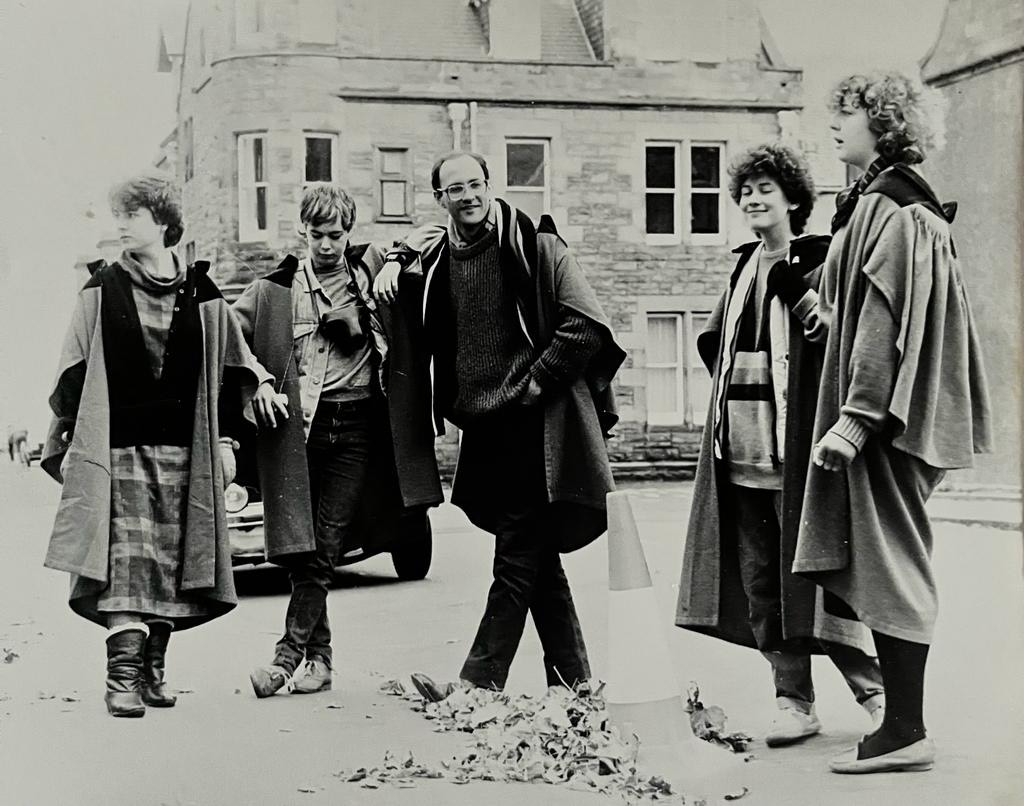
Student life at St Andrews
John embraced all aspects of student life and made many fantastic friendships that lasted a lifetime. He also met his future wife and soulmate, Jan (née Gardiner, MA Hons 1989), who studied History at the University.
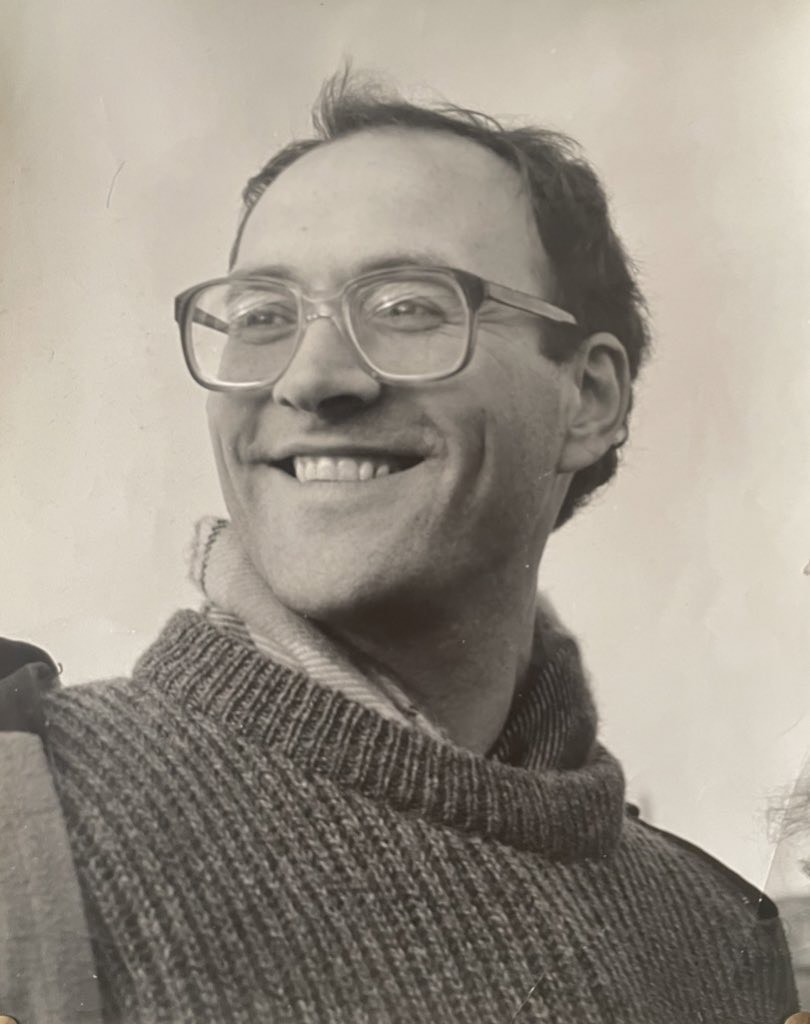

By the time he graduated, John knew that he wanted to work in support of the most discriminated against and disadvantaged people in society and so he spent a year volunteering with the Simon Community, a charity that provided support to homeless and vulnerable people in Glasgow. That experience enabled John to apply to train as a social worker. Interestingly, this was the first time that he encountered an educational body that was uncomfortable with his past. One of the universities in the west of Scotland rejected his application specifically on the grounds that they couldn’t guarantee to be able to offer him the placements that were essential elements of the professional qualification. They stated that his background presented difficulties in the context of the sectarianism that was still prevalent in that part of Scotland.
Thankfully, the University of Edinburgh accepted John onto their Master of Social Work programme, and he rewarded that admission by excelling in both the academic and practical elements of the degree. Ironically, on graduating, his first job as a social worker was in the west of Scotland!
One of his favourite memories of his Masters study was an occasion when he was supporting a young person in their appearance at the Sheriff Court. There was a point in the proceedings when John was called on to speak directly to the report he had submitted, and one of the court officials approached John to take the oath. The presiding sheriff noticed John’s University of St Andrews graduate tie and immediately indicated that there was no need for the oath, stating that, as John was a graduate of the finest university in the country, he was clearly a man of integrity and unimpeachable background!
A career spent supporting others
While John relished the work he did in the community of Wishaw, the daily commute proved extremely challenging, so when the opportunity arose for him to work in Edinburgh for Barony, a housing association that provided support and accommodation to those leaving institutions such as prison or psychiatric hospital, he seized it. John spent the next 20 years as a senior social worker and training manager for the organisation. During this time, he also qualified as a mental health officer and a practice teacher for student social workers.
In 2012, his role at Barony was made redundant; however, he continued to work as a freelance practice teacher advising and supporting many student social workers through their training. A few years later he was employed as a mental health mentor by the University of Edinburgh’s Student Disability Service, and he remained in this role until his retirement in 2021.
Although John disengaged from paramilitary activity after his prison sentence, he stayed in contact with many of his UVF friends and peers. Amongst them was David Ervine, whose period in Long Kesh overlapped with John. They became very good friends and shared political views on the importance of reaching a peaceful and negotiated end to the conflict in Northern Ireland. David went on to become leader of the Progressive Unionist Party (PUP) and played a key role in achieving peace. While John was still working for Barony, David approached him to join the PUP and work closely with him in his negotiations. John seriously considered this proposal but ultimately felt that he had made his life in Edinburgh where, by this point, he not only had a home and career, but also a young daughter. Consequently, although he supported David’s work and applauded his achievements, he did not take up the offer of moving into politics.
Strength and resilience
In April 2024 John suddenly became very unwell and was admitted to hospital, where he remained for five months while medical staff worked tirelessly to establish what was wrong. After 5 months John was diagnosed with incurable brain cancer. His strength and resilience throughout his illness were astonishing, and he rallied sufficiently to return home in September 2024. Very sadly, John died at home on 27 March 2025. Over the period of his illness John was supported by family and friends from St Andrews, Belfast, England and Edinburgh, many of whom took time to visit John both in hospital and at home.
John’s route to St Andrews was far from typical, but he had enormous respect for the institution that changed his life. Moreover, as well as being a regular donor to the University for several years, he took every opportunity to praise, promote and extol the virtues of a St Andrews education, and, despite holding degrees from three other institutions, he always regarded himself as a St Andrews man.
Leaving a legacy
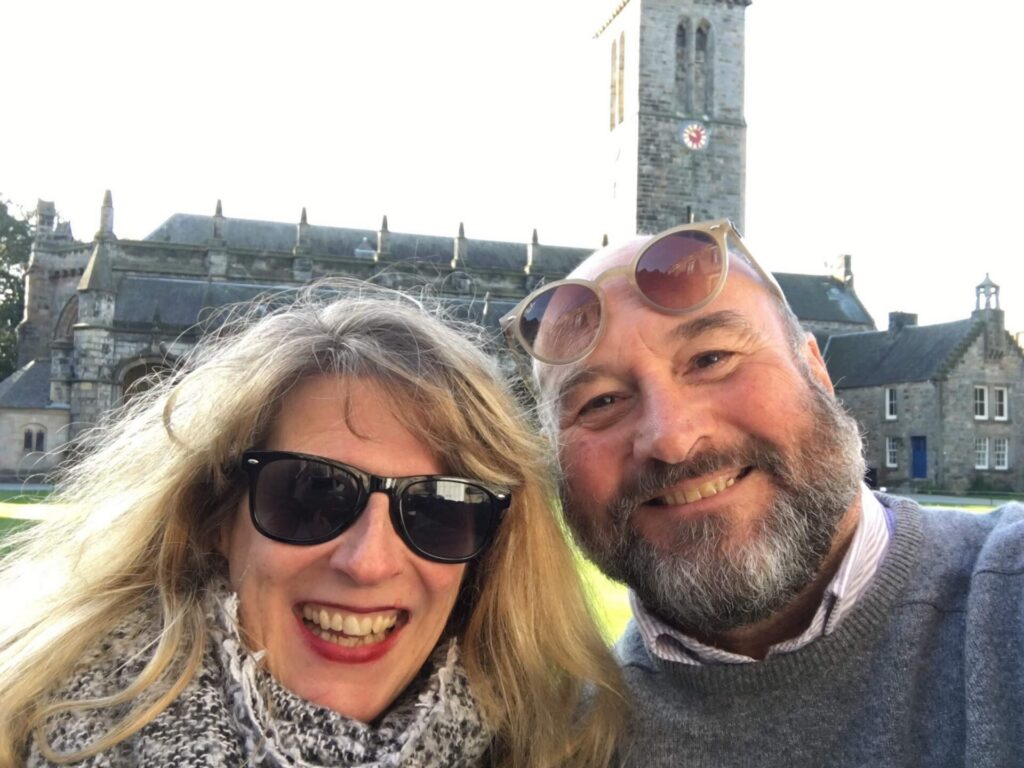
Both John and Jan agreed that they would leave a legacy to the University. This decision was particularly important to John as his attendance at St Andrews completely changed his life. He wanted to leave a legacy gift to contribute to the support of future students, especially those who come from non-traditional backgrounds, as he did.
With thanks to Jan Wallace (MA Hons 1989) for sharing John’s story.