Redemption Roasters: the alumni duo changing lives through coffee

Alumni duo Max Dubiel (MA 2010) and Ted Rosner (MA 2011) founded Redemption Roasters after meeting as students at St Andrews. Their mission is to reduce reoffending through coffee. The pair speak candidly about the opportunities and obstacles that come with building a business with social impact.
The St Andrews Charity Fashion Show is the largest and most successful student-run fashion show in Scotland. It was also the first of its kind in the UK. It was through this ‘catwalk collective’ that Max Dubiel and Ted Rosner first met. Ted studied History and Max studied International Relations, which will be housed in ‘New College’ side by side with the University of St Andrews Business School, thanks to the Making Waves Campaign. Both were budding student entrepreneurs in their own right. Max was testing the waters of the business world, having set up his own jeans company, while Ted was venturing into e-commerce, selling medical watches. Max needed a skipper for a sailing trip, and Ted stepped away from his after-class side hustle to come aboard.
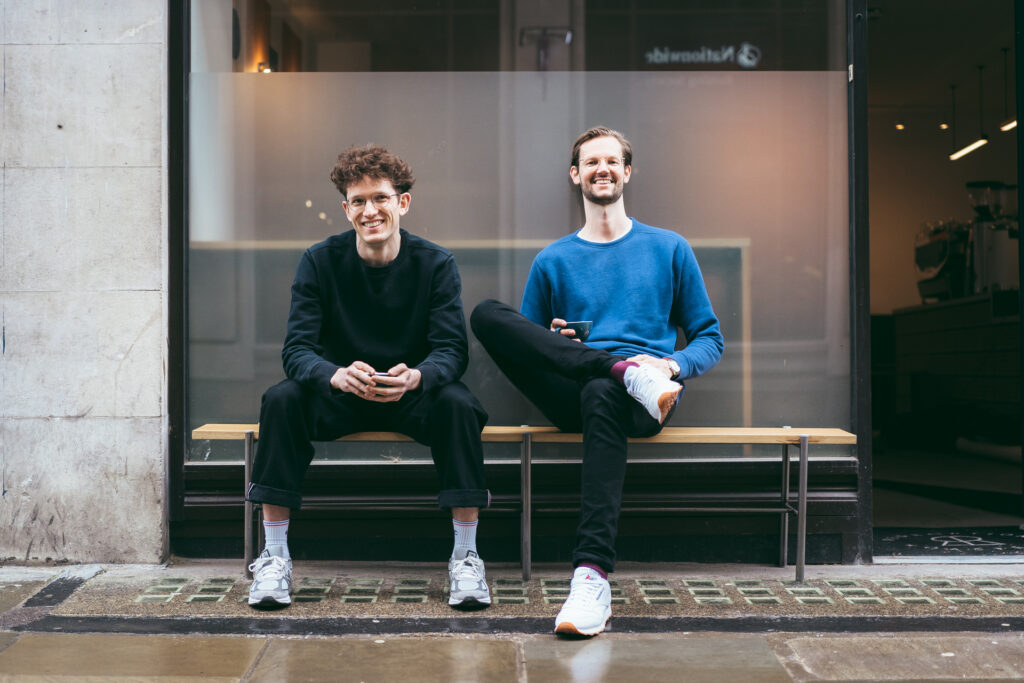
Max, who was heading up the Show’s Events Committee, recognised a shared determination in Ted. “Often in student-led, volunteer roles it can be hard to get people to follow through,” Max recalls. “Ted would just get it done, and I was really impressed with that. So impressed that I thought ‘maybe one day we’ll start a business together’. He always stuck with the strategy of under-promise and over-deliver.”
After graduating, both went on to work in London. Max pursued a career in consulting before swapping his job in the City to co-found Black Sheep Coffee with fellow St Andrews alumni Gabriel Shohet (MA 2010) and Eirik Holth (MA 2010). After a few years of direct involvement, Max spun out the wholesale side of Black Sheep to form a new company.
Ted, meanwhile, was training as a lawyer and soon found himself longing to return to his entrepreneurial roots.
“At that stage, Ted was fed up with being a lawyer,” Max remembers. “He called me up to ask if there was something we could do together. I said, ‘funnily enough, yes, there is’. So, we launched Catimor Ltd (named after a niche variety of Arabica coffee) in 2015 and started to distribute coffee wholesale, waiting to see where it would lead us.”
Everything clicked into place when Max and Ted were approached by the Ministry of Justice in 2016, who were looking for opportunities to reduce reoffending rates, and asked whether the pair would be interested in offering barista training in prisons throughout the UK.
“We felt the idea of working with prisons was intriguing and could have legs; although neither of us had any experience of prison systems,” says Max. “We wanted to do something more interesting than a one-off training session and instead came up with a whole concept based around reducing reoffending. This became Redemption Roasters. A year later, our first roastery opened in HMYOI Aylesbury.”
The pair are open about the difficulties of setting up an unconventional business such as Redemption Roasters. Max jokes that the logistics of setting up a coffee roastery inside a prison were a “total nightmare”.
“There was all the bureaucracy you can imagine, but not for no good reason,” he says. “A prison is built to keep its staff and residents secure; a startup wants to move quickly to get its coffee production up and running. Both have different motivations and priorities. Although it wasn’t without its challenges, setting up the roastery was exciting – the concept got a lot of attention in the press.”
Redemption Roasters currently operates 12 coffee shops in London and four barista academies ‘on the inside’: HMP High Down, HMP Wandsworth, HMP Downview and HMP Wormwood Scrubs. Each academy offers three-week intensive courses for the inmates (known as ‘participants’ to Redemption Roasters).
The course equips participants with all the essentials to begin their career in coffee – no experience required. Trainees learn about the origins of beans, how to operate espresso machines, key customer service skills and, crucially, how to make a delicious cup of coffee.
“We also focus on developing life skills such as timekeeping and financial management,” Max explains. “A lack of these skills is often a significant factor in determining whether someone will reoffend. We want to prepare participants for life beyond prison.”
This support continues after release; caseworkers provide participants with what Max and Ted called a ‘through-the-gates’ service, helping participants adjust at their own pace. This might include regular check-ins, assistance with writing job applications and wellbeing support to help participants on this journey of breaking the cycle of reoffending. Redemption Roasters also partners with charities to address critical needs such as housing, which is a major determining factor as to whether someone will be able to successfully reintegrate into society.
“We first met James at HMYOI Aylesbury when he was only 17,” says Max, remembering one of their most promising participants “He had never tried coffee before starting, but he used the course as an escape and really threw himself into it. In the evenings, he’d rewrite the day’s notes and create the most beautiful drawings of different coffee plant varieties – it was clear he had a real passion for coffee.
“James showed a natural talent for roasting and developed a great relationship with our head roaster. He was released to Oxford, so we couldn’t employ him directly in one of our coffee shops, but we reached out to put him in touch with a roastery based there, where he became their head roaster. He’s now a successful coffee machine engineer, travelling all around the country.”
Stories such as James’ demonstrate the power of the training provided by Redemption Roasters as a vehicle for changing lives.
The numbers speak for themselves when it comes to Max and Ted’s success. In 2025, they maintained a 0% known reoffending rate for participants compared to the national average reoffending rate of 42%. Max and Ted run the business on a ‘profit for purpose’ model – their commercial success fuels their social impact. Participants now work across all areas of the business – in the roastery, the cafés and at Head Office, with 26% of the shop workforce being made up from participants. Redemption Roasters also runs a community academy for people with convictions, designed to support them into meaningful employment either within the company or with industry partners.
In December 2025, Redemption Roasters expanded its roastery beyond prison walls for the first time, marking a new chapter for Max, Ted and the team. Their new, larger roastery based in Wembley will enable the team to make more coffee, create more jobs for prison leavers and extend their mission.
As Redemption Roasters grows and diversifies, the pair are refreshingly open about the challenges of entrepreneurship. Ted says he made use of career coaching to help him build Redemption Roasters, describing it as a “total game-changer”.
On advice for those starting their own business journey, Ted says: “Hire earlier and hire people with experience. People often say hire on attitude, not experience, but I disagree. Hire on both – it can’t just be one or the other when you are building a strong team.”
For those looking to launch an impactful business, Max’s advice is straight to the point: “Don’t expect the impact alone to carry the commercial operation. Choose a cause that you really care about, something that differentiates you, but ensure the business is strong in its own right.”
Despite a tough time for retail and hospitality in recent years, the friends remain optimistic. Their focus is on steady, sustainable growth while staying committed to their founding purpose.
From entrepreneurial beginnings at St Andrews, Max and Ted have grown Redemption Roasters into a business with tangible impact – reducing reoffending and making a difference to society one cup of coffee at a time.
Find out more about ‘New College’, home to the future leaders in business and innovation.
This article first appeared in Chronicle 2026. For additional content, including news, stories and videos, visit Chronicle Extra, the digital companion to the magazine.