The accidental geologist

Catherine Rose (BSc Hons 2005), Director of Teaching and Senior Lecturer in the School of Earth and Environmental Sciences, reflects on her ‘pleasingly accidental’ career path. What began as a spur of the moment choice on a university application form, led Catherine down a path of geological discovery. This decision would take her from Scotland to Namibia, Bhutan, Australia and beyond – before bringing her right back to St Andrews.
I came to St Andrews – and to geology – largely by accident. St Andrews had gone on my application almost on a whim, but when I came up from Herefordshire to visit, it just felt right: small, beautiful and by the sea.
Following my curiosity
I arrived intending to study geography, but one of the joys of St Andrews was being able to try other subjects. I chose astrophysics and Earth science and rapidly migrated towards the latter. Geology was harder than geography. I frequently had absolutely no idea what I was doing, and I loved it. One week we were staring down microscopes at thin slivers of rock to piece together the history of a volcano; the next, investigating drainage patterns, drawing cross-sections through the Earth’s crust, writing reports or standing on a hillside trying to turn a landscape into a geological map. Then there was the sheer scale of geological time – learning to think in millions and billions of years. The variety enthralled me. I became obsessed.
One summer, my best friend and geology partner, Fiona Best (BSc Hons 2005), and I camped on the uninhabited island of Garbh Eileach, off the south coast of Mull, mapping ancient glacial deposits. Our companions were a small herd of deer, a bonkers sheep we called Dolly and an infinite supply of ticks and midges. A fisherman dropped us off and, when we accidentally broke one of our geological hammers, we somehow managed to arrange a replacement delivery courtesy of Navy deep-sea divers training nearby. It was a brilliant summer with more than a hint of Swallows and Amazons about it.
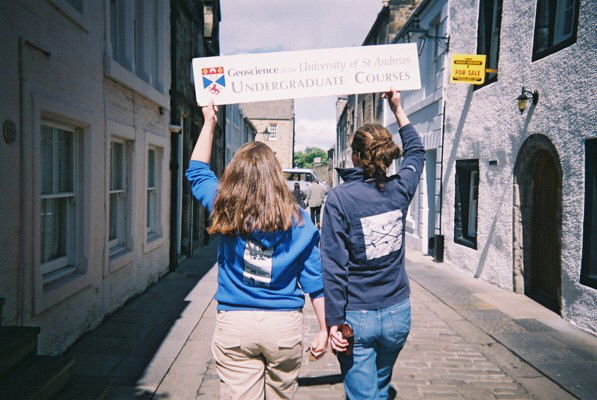
The degree was fairly all-consuming, although I managed to squeeze in netball, polo and life in MacIntosh Hall. I worked hard, subscribing to the questionable philosophy of ‘work hard now, and you can play for the rest of your life’. My curiosity, obsessive tendencies and considerable swotting eventually earned me the University’s Miller Prize. By graduation in 2005, I knew I still wanted to learn more.
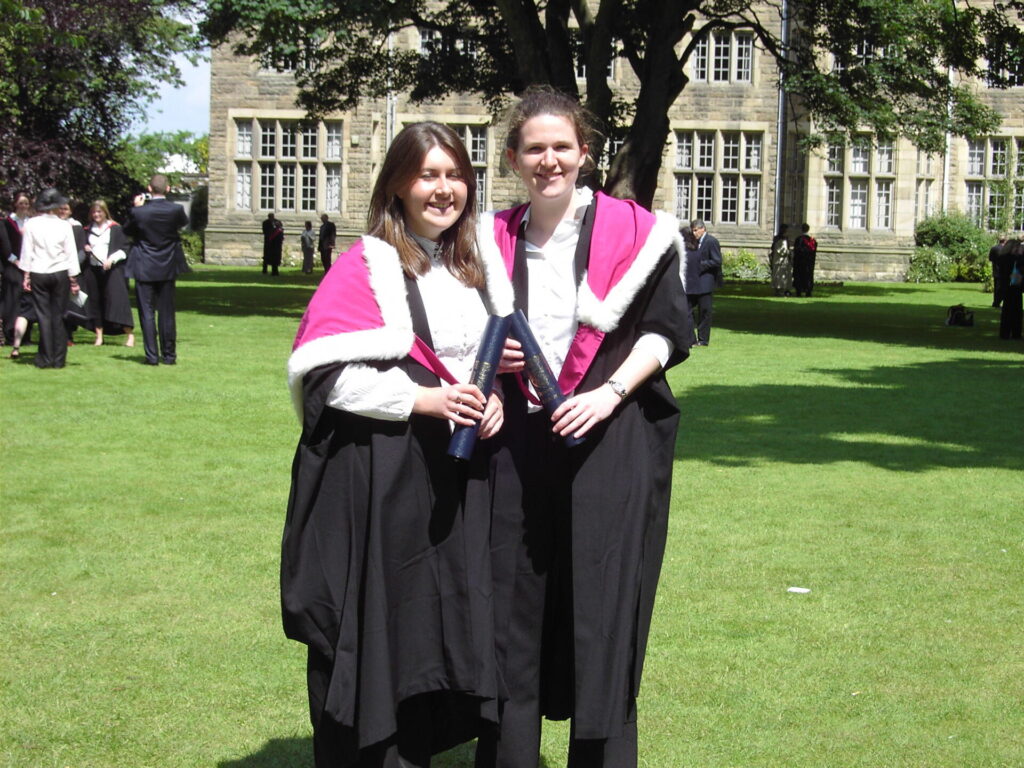
Fieldwork, a mouse plague and a royal honour
First, though, I headed to Namibia for three months as a field assistant with a Harvard research group. There were just three of us – me, a graduate student and an undergraduate – driving around northern Namibia in a pickup called Rhonda. We worked in the remote Steilrandberg Mountains, ate the same food endlessly, saw ridiculous amounts of African wildlife and became alarmingly proficient at changing tyres – sometimes two flats in a day. It was a formative experience, and I loved it.
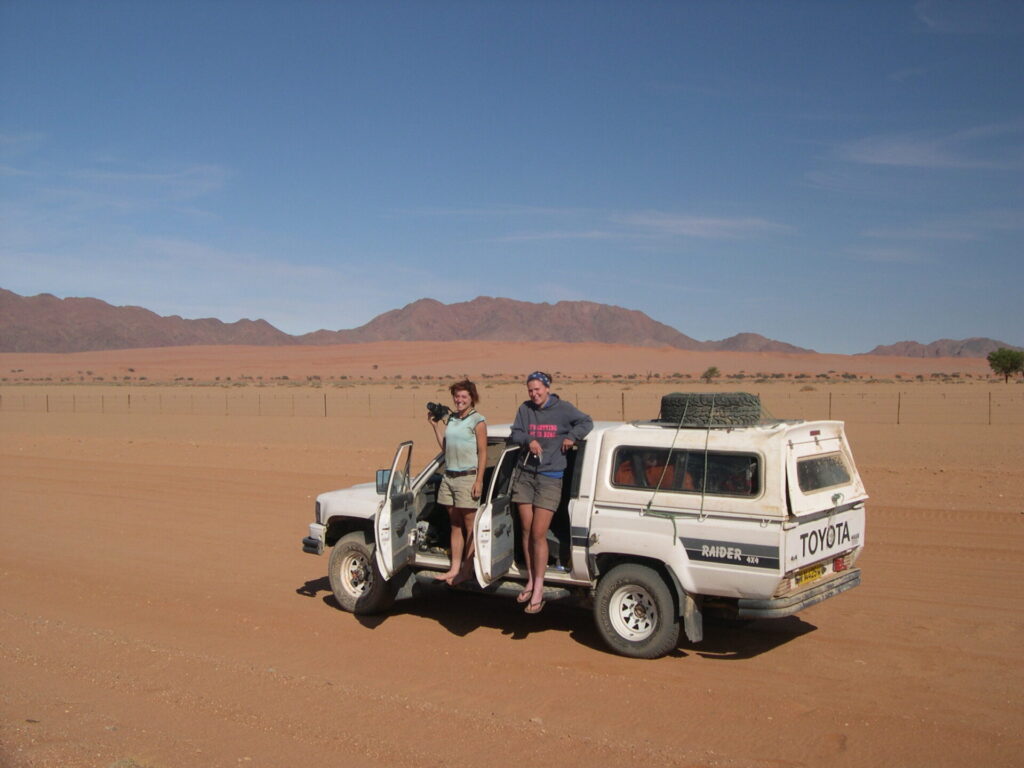
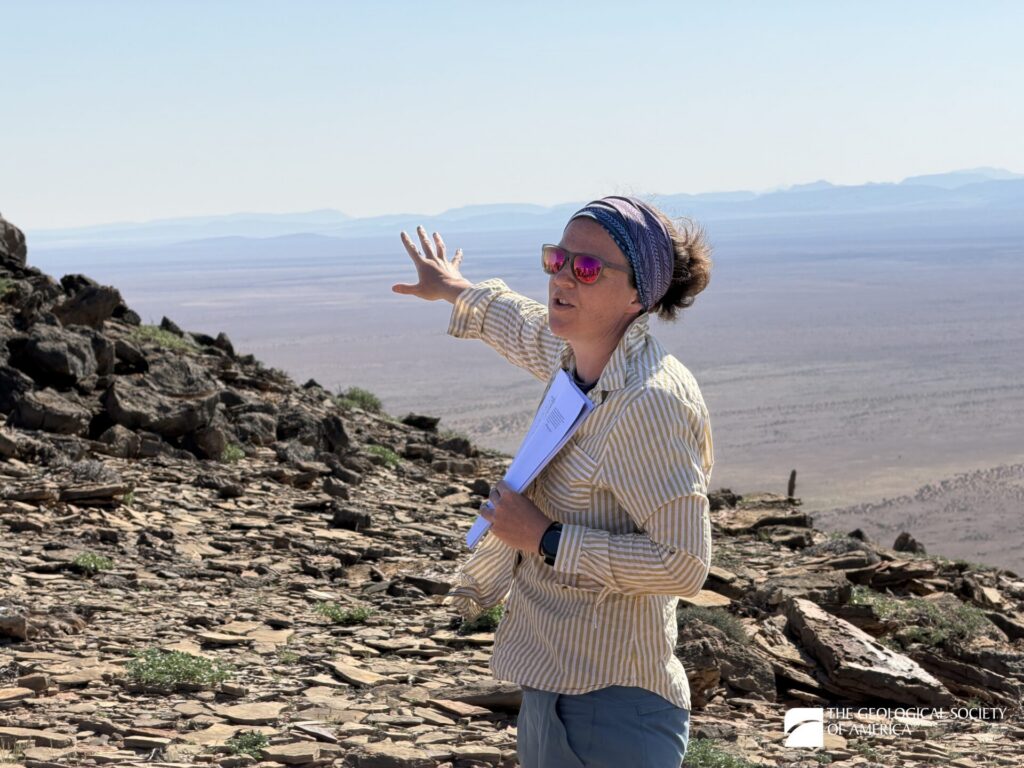
I then relocated to the US to start a PhD at Princeton University, which took me to the Flinders Ranges of South Australia for months at a time. My research investigated the advance and retreat of an ancient glaciation across a carbonate platform around 650 million years ago.
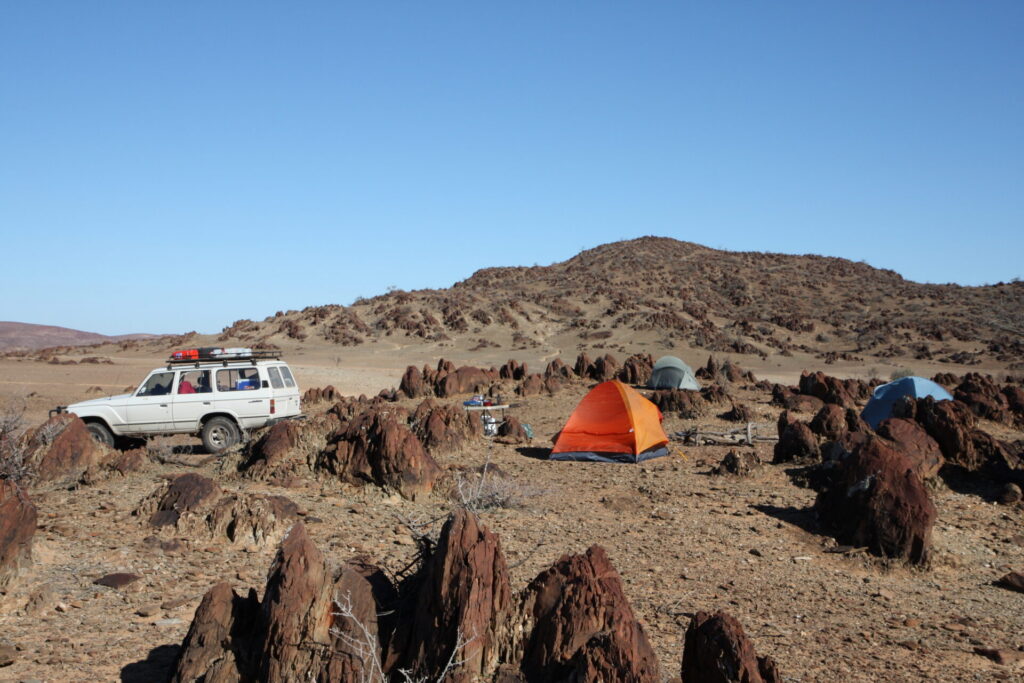
One field season coincided with a mouse plague. There were mice everywhere – in our tents, sleeping bags and running up our legs while we cooked dinner. My field assistant and I were driven to increasingly extreme measures. A wheeled cooler became an unexpectedly effective piece of mouse-control equipment. Every morning, mysteriously, we’d find the casualties had disappeared, even when we migrated to different campsites to reach new outcrops.
Then we realised: snakes. Talk about out of the frying pan and into the fire.
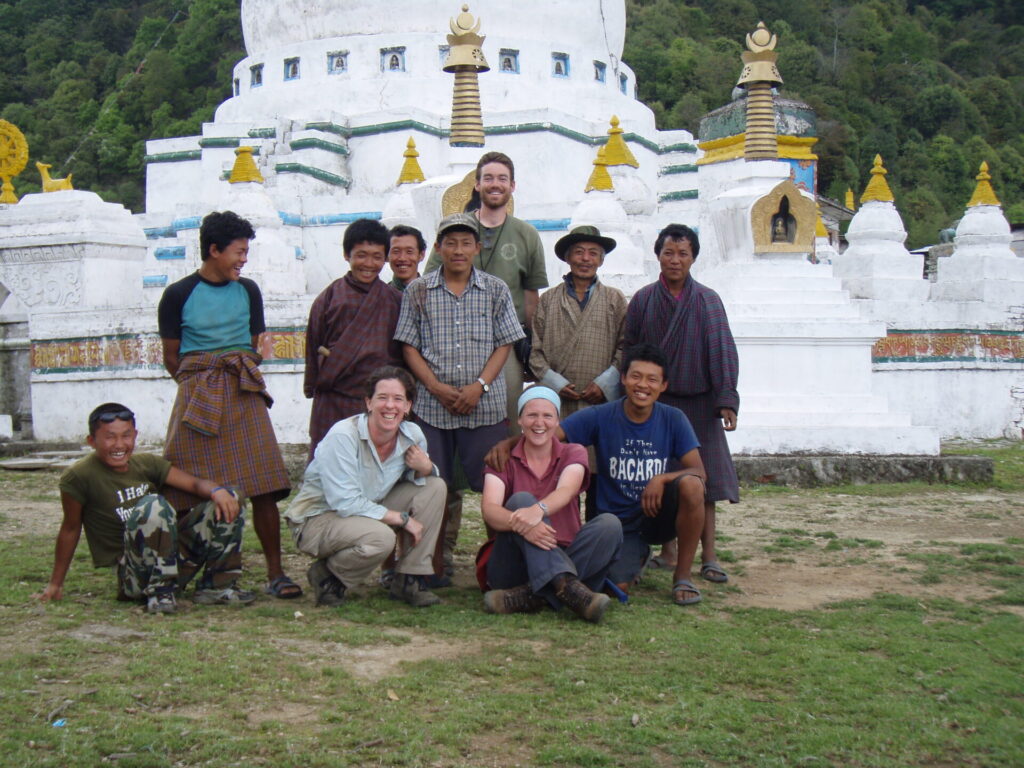
Graduate school also took me to Bhutan in 2007, where I joined a small team mapping the remote Kuru Chu Valley. With a handful of local guides and ponies carrying our equipment, we trekked through the Lesser Himalayas towards the Indian border. This was before roads reached much of the area, so everything went in and out on foot or horseback. Our work produced the first geological map of this part of eastern Bhutan and was subsequently recognised by the King of Bhutan – not something I had anticipated when I first stumbled into an Earth science class at St Andrews.
The winding road back to St Andrews
After Princeton, I moved to Washington University in St Louis as a postdoctoral fellow, then gradually migrated back towards home: first to Trinity College Dublin and, eventually, back to St Andrews as an academic in the School of Earth and Environmental Sciences. Returning has brought things full circle. My research still takes me to extraordinary places, but these days I spend less time living out of a vehicle and more time leading international field trips and taking students to the Scottish outcrops where I once stood bewildered as an undergraduate.
Increasingly, some of my most rewarding work comes through GeoBus and GeoBus without Borders, which takes our hands-on approach to Earth science education internationally. We work with teachers and local partners to develop simple, affordable activities that can be adapted, reused and shared in their own classrooms. The aim isn’t to fly a Scottish GeoBus team around the world, but to share resources, skills and experience so that local educators can make them their own and reach far more young people than we ever could ourselves. Most recently, in Ethiopia, we worked with more than 500 pupils and 46 teachers, while building partnerships to extend the programme beyond Addis Ababa.
Research has allowed me to work in extraordinary places and think about events hundreds of millions of years ago. Teaching and outreach give me something more immediate: watching someone become curious about the planet beneath their feet. It has been a pleasingly accidental career. A whim brought me to St Andrews, an optional subject turned me into a geologist, and geology took me from Scottish outcrops to Namibia, Bhutan, Australia and beyond – before eventually bringing me back. Nearly 25 years later, I still get to be curious about rocks for a living. I still have absolutely no regrets about abandoning those geography essays!
If you would like to learn more about GeoBus or would like to get involved, we would be delighted to hear from you at [email protected].